

Short answer: A good busking set list opens with your most attention-grabbing song, mixes familiar songs with a few originals, keeps gaps short and fits the time you are allowed at each pitch. Plan 30 to 60 minutes of material per set, enough that people who stay a while do not hear repeats.
Busking audiences are not concert audiences
At a gig, people arrive at the start and stay to the end. On the street, your audience changes every minute. Most people hear only a short stretch of you as they walk past. A few stop for one song, and a handful stay for several.
That changes how you build a set. Every song needs to work as a first impression, and there is no slow build to a big finish, because almost nobody hears the whole thing.
How long your set should be
Let the rules shape your set length. Many cities limit how long you can stay at one pitch:
- Westminster: sets of no more than 40 minutes, then a 20-minute break.
- Amsterdam: 30 minutes in one place.
- Adelaide: 45 minutes per location.
- Auckland: up to 60 minutes of performance plus 30 minutes for set-up and pack-down.
- Glasgow: up to two hours in one location.
Some cities also set a minimum repertoire. Dublin and Cork expect at least 30 minutes without repeating, and Barcelona asks permit applicants for a repertoire of at least two hours. Liverpool's code suggests leaving at least 30 minutes before repeating a song.
A practical target is 30 to 60 minutes of material for each set, plus a few spare songs.
Open strong
Start with the song that makes people turn their heads. That might be something upbeat and instantly recognisable, a striking instrumental intro or the song you play best. Avoid opening with a slow ballad or a song that takes a minute to get going. You can use the same opener at each new pitch, because the audience is new each time.
Familiar songs versus originals
Recognisable songs make people slow down, smile and sometimes sing along. Originals give you something to sell or share, and can build a following. A good mix for most buskers is mostly familiar material, with originals placed between strong covers so you do not lose people for long.
- Pick covers that suit your instrument and voice, not just what is popular.
- Choose songs people across ages know, as your audience is mixed.
- Play your originals when a small crowd has already formed. They are more likely to stay.
- Say the title of an original and where people can find it.
Pacing and flow
- Keep gaps short. Have the next song ready. Retune between songs only when needed.
- Vary the energy. Alternate upbeat songs with mid-tempo ones so you do not tire your voice or your audience.
- Shorten songs. Two verses and a chorus are often enough on the street. Cut long intros and solos.
- Have a crowd song ready. When people gather, play the song most likely to keep them.
- Keep a backup list. Swap songs depending on who is around: families, office workers or a late crowd.
Building in moments to ask for tips
The best time to mention tips is right after a song ends, when people who stopped are deciding whether to move on. Keep it short and friendly: thank them, say your name, point to your case and sign, and start the next song quickly.
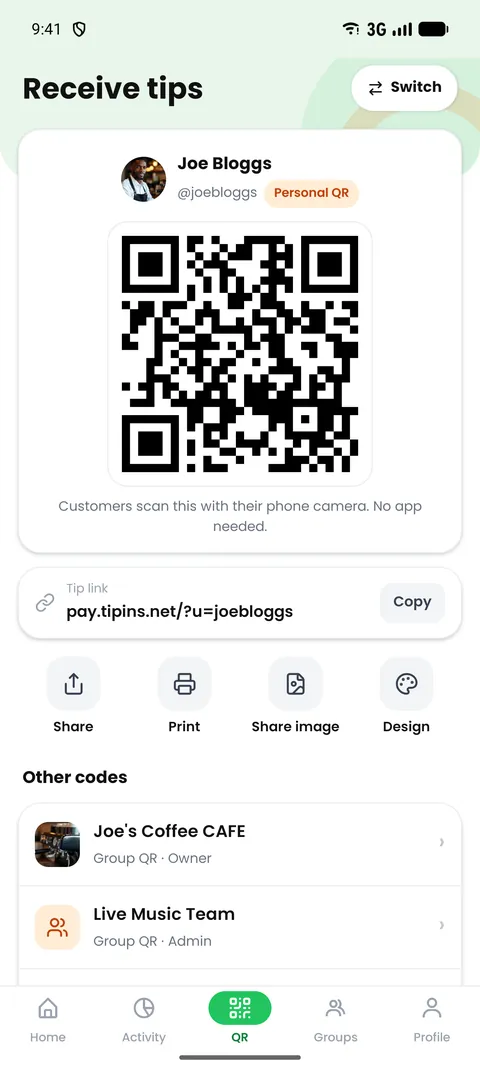
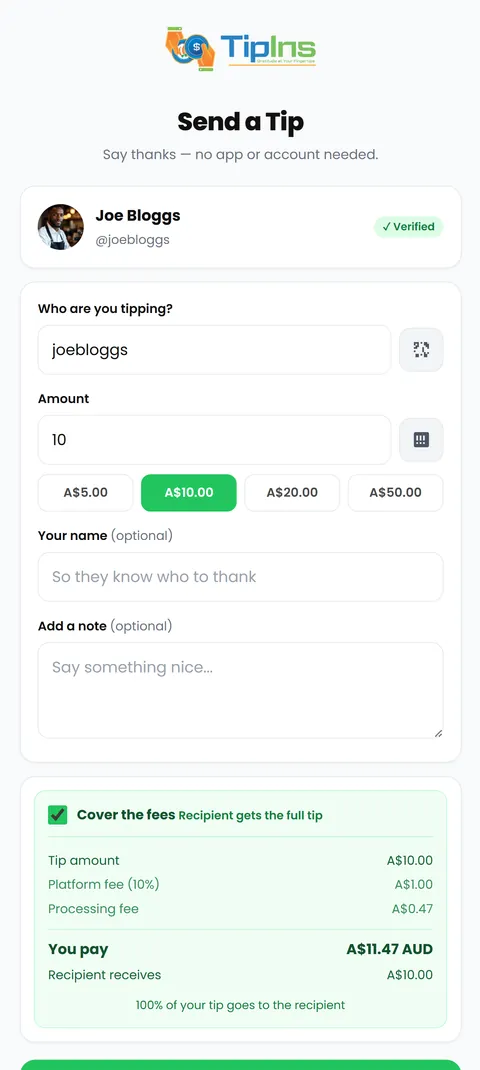
Many people have no coins on them, so mention that they can also tip by card. With a TipIns QR code on your sign, people scan with their phone camera and tip by card, Apple Pay or Google Pay without downloading anything. Say it once or twice a set, not after every song.
Keep your set list practical
- Write your list in large print on a card, or keep it on your phone or a tablet on a clipped stand.
- Mark which songs are openers, crowd songs and quiet songs.
- Note any song that does not work and swap it out next time.
- Do not write out lyrics you need in full. If you need the words, the song is not ready for the street yet.
Mind the volume and the neighbours
Your set list affects noise as well as tips. Loud, repetitive songs played every half hour irritate shop staff and residents and lead to complaints. Mix in quieter songs, change the order at each pitch and follow the local limits on volume and amps. The busking map links to each city's rules, and our busking etiquette guide covers living alongside shops.
World busking map: Permit rules for 131 cities on one map.
Common questions
How many songs do I need to busk?
Enough for 30 to 60 minutes per set, which is often 10 to 15 songs. Dublin and Cork expect at least 30 minutes of material without repeating.
Should buskers play covers or originals?
Mostly familiar songs with some originals mixed in works for many buskers. Covers make people stop, and originals help you build a following once a crowd has formed.
What is a good first song for busking?
The one that grabs attention fastest: upbeat, recognisable and something you play well. Avoid slow openers, since passers-by only hear a few seconds.
How long should a busking song be?
Shorter than on a record. Two or three minutes is often enough, as most people only hear part of it while walking past.
Can I repeat songs when busking?
Yes, but leave time between repeats. Liverpool's code suggests at least 30 minutes before playing the same song again, and the people near you will thank you for it.

 App Store
 Google Play