
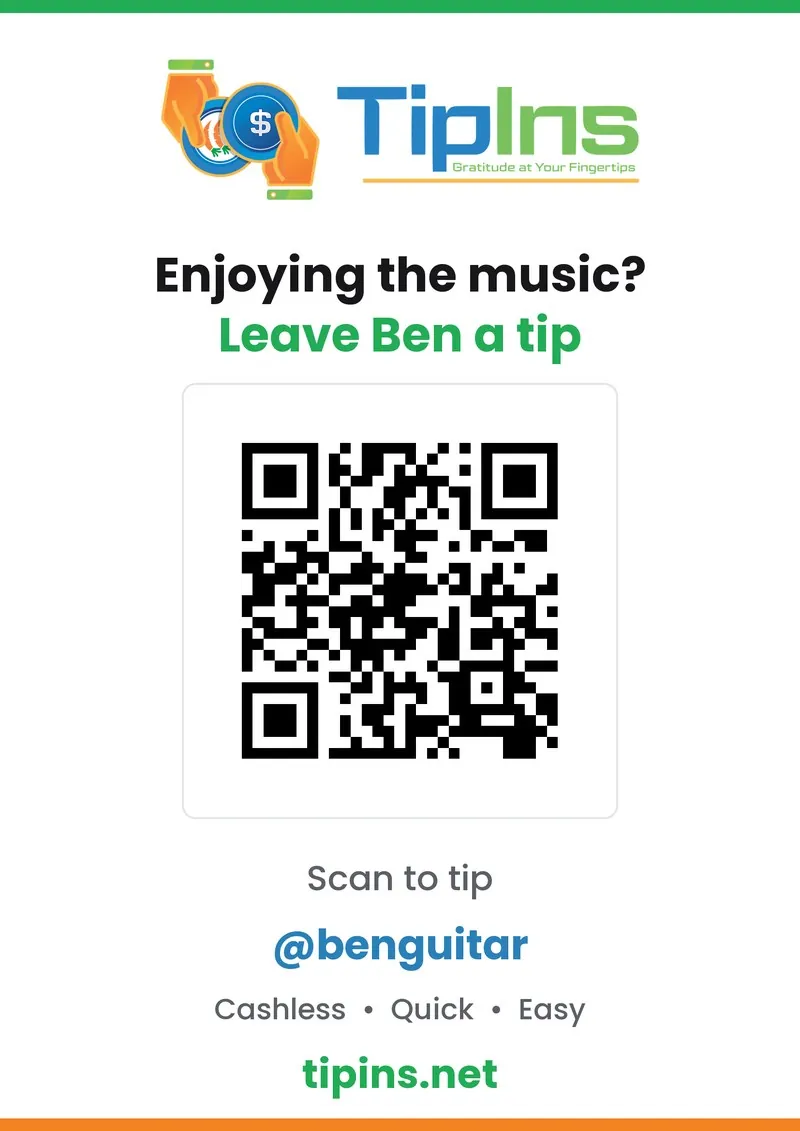
Short answer: Stand where people can stop without blocking anyone, start each cycle with your strongest material, and make tipping obvious and easy with a clear sign, an open case and a card or QR option for people without coins. Then thank every tipper, because other people are watching.
1. Pick a pitch where people can stop
High foot traffic helps, but only if people have somewhere to stand. A spot beside a wide pavement, a square, a queue or a bench usually beats the middle of a narrow, rushing street. A wall or shopfront behind you also helps your sound carry forward instead of disappearing.
Make sure the pitch is legal before you get comfortable. Many cities use designated pitches, time limits or permits, so check yours on the world busking map and read how to choose a busking pitch.
2. Play to the people who are already there
Match your material to the crowd. Commuters in the morning may respond to something calm and familiar; a Saturday afternoon crowd may want energy. Watch which songs make people slow down and move them earlier in your set.
3. Open strong, and keep the cycle short
Most passers-by hear you for less than a minute. The first 20 to 30 seconds of a song matter more than the bridge. A few practical habits:
- Start songs at a recognisable point, such as the chorus or a strong riff.
- Keep gaps between songs short. Silence makes people walk on.
- On busy streets the audience changes every few minutes, so you can repeat your best material more often than you would at a gig.
- For circle shows, build the crowd first and make the tip ask at the end, when everyone is watching.
4. Make your sign do the work
A good sign answers three questions at a glance: who you are, how to tip and where to follow you. Keep it short and readable from a few metres away.
- Your act name in large letters
- How to tip: cash in the case, card or phone by QR code
- One social handle, not five
- A thank-you line rather than a demand
The free tip sign generator makes a printable sign in a couple of minutes. Some cities limit how you ask for money: Manchester's code says not to use signs to actively collect money, and Bath's guide says you may accept donations but not ask for them. Check the local wording before you print.
5. Seed the case
An empty case can make people unsure whether tipping is expected. Many buskers start with a few coins and a note or two in the case so passers-by can see that others have tipped. Take most of the cash out during the session so the case never looks like an easy target.
6. Thank people, every time
A nod, a smile or a quick "thank you" between lines tells the person who tipped that you noticed, and it shows everyone nearby that tipping is welcome. Children who drop a coin in often bring their parents back. Eye contact with people who stop also turns listeners into an audience.
7. Look like you mean it
- Tidy setup, case open and facing the footpath
- Stand if you can, or sit up where people can see you
- Tuned instrument and a sensible volume, so shops and neighbours do not complain
- Keep your phone out of sight between songs, unless you are showing your QR code
8. Choose your time well
Lunchtimes, late afternoons, weekends, market days and event nights tend to bring more people with time to listen. Track your sessions for a few weeks and you will see your own best hours. See best times to busk.
9. Stay on good terms with the street
The shopkeepers, cafe staff and security guards around your pitch decide whether you can come back next week. A busker who gets complaints often loses the spot, and the takings with it.
- Say hello to nearby businesses when you arrive and ask whether the volume is fine.
- Keep doorways, shop windows and fire exits clear.
- Leave when your time is up, and let the next performer take the pitch.
- If a shop asks you to turn down, do it. Goodwill is worth more than one loud song.
Regular pitches with friendly neighbours also build regulars: people who hear you every week, recognise you and tip again. See busking etiquette for more.
10. Give people without cash a way to tip
Fewer people carry cash than they used to, and many have no coins on them at all. If a listener wants to tip and cannot, you lose that tip. A QR code on your sign lets them tip by card, Apple Pay or Google Pay in a few taps. Keep the case open too, so cash tippers are never left out.
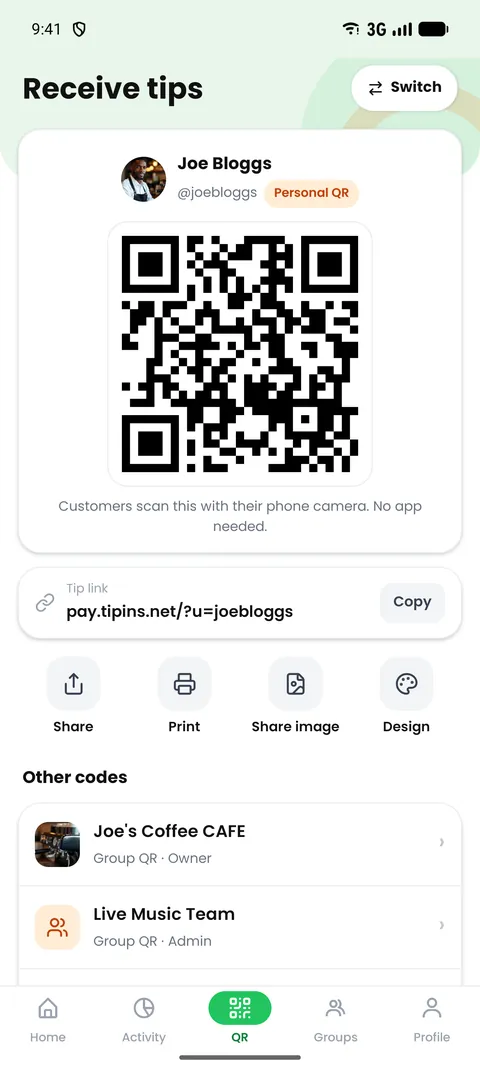
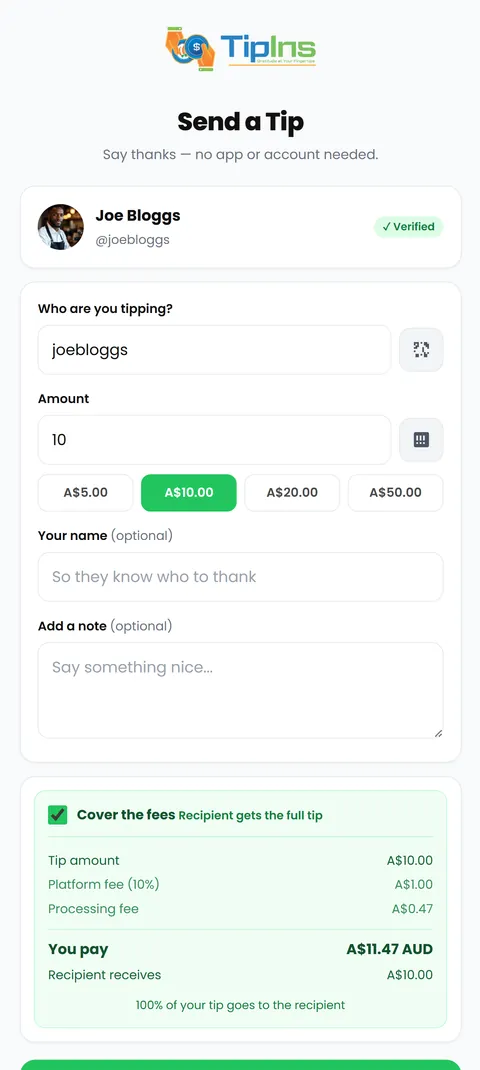
With TipIns, listeners scan your code with their phone camera and tip on a web page, with no app or account needed. By default the person tipping covers the 10% platform fee and the small card processing fee, so you receive the full tip. If you play in a band, one group QR code can split every tip between members. Print-ready signs export from the app in business card, A5, A4 and A3 sizes. Card tips still count as donations, so follow any local rules on how you collect: in Ottawa, for example, donations must go into a stationary container rather than being collected by roaming.
World busking map: Permit rules for 131 cities on one map.
Common questions
What is a good tip for a busker?
Any tip is welcome, and amounts vary a lot by country and city. Instead of worrying about the average, focus on getting more of the people who stop to tip at all.
Should buskers ask for tips?
In many places a polite sign or a thank-you is fine, and circle shows usually make a clear ask at the end. Some cities limit asking for money, such as Bath, where you may accept donations but not ask for them, so check the local rules.
Do QR codes really help buskers get more tips?
They help with people who want to tip but have no coins or cash. They work best on a large, clear sign placed near the case, alongside an open case for cash.
Where should a busker put their sign?
In front of or just beside you, at an angle people see while walking towards you, close enough to the case that tipping feels like one step. Make sure it does not block the footpath.
How long should a busking set be?
On busy streets, the audience changes every few minutes, so short songs with quick changeovers work well. Time limits per pitch also apply in many cities, such as 2 hours per location per day for a low impact act in Sydney.

 App Store
 Google Play