

Short answer: Good busking etiquette comes down to four habits: keep your distance from other performers, move on when your time is up, play at a volume the street can live with, and keep doorways and footpaths clear. Many cities write these habits into their permits or voluntary codes, so following them also keeps you on the right side of the rules.
Why etiquette matters as much as the rules
In plenty of cities there is no permit at all, just a code of conduct. Glasgow, Manchester, Bath and Edinburgh all work this way. The code is voluntary, but complaints are what bring enforcement, and in Scotland police can ask a busker to stop and equipment can be seized if the request is ignored.
Where permits do exist, the etiquette is usually written into the conditions. Either way, the buskers who keep good pitches for years are the ones shopkeepers, residents and other performers are happy to see.
Sharing a pitch with other buskers
Most busy spots work on first come, first served. The polite way to handle a taken pitch is simple:
- Wait until the performer finishes a song, then ask when they plan to finish. Do not set up next to them and start.
- Agree a handover time and stick to it. Liverpool's guide describes exactly this: buskers agree handover times among themselves.
- Pack down promptly when your time is up so the next act is not standing around.
- Do not reserve a pitch with an empty case or a bag while you go for coffee.
Spacing between acts is also common. A few examples from city rules and codes:
| City | Distance from other buskers |
|---|---|
| Sydney | At least 100 m |
| Dublin and Cork | 50 m |
| Adelaide, Edinburgh, Glasgow, Manchester, Liverpool | 50 m |
| Auckland | 50 m between sound performances |
| Santa Monica Promenade, Las Vegas Fremont Street | 40 feet |
| Portland | About one block (a community guideline) |
If there is no written rule, a good test is whether you can hear the other act from your pitch. If you can, you are too close.
Time limits and moving on
Staying all day on the best spot is the fastest way to annoy other buskers and nearby businesses. Many cities set a limit, and the gap between them is wide:
- Amsterdam: 30 minutes in one place, then move at least 100 metres.
- London (Westminster's code): sets of no more than 40 minutes, then a 20 minute break before the next act.
- Adelaide: 45 minutes, and you cannot reuse the location that day.
- Vancouver, Edinburgh and Perth: around an hour, then move on.
- Manchester: 90 minutes, and do not return within 24 hours.
- Melbourne, Dublin and Glasgow: up to two hours (one hour on Grafton Street in Dublin).
Where there is no rule, an hour is a sensible default. It keeps your set fresh and gives other performers a turn. Check your city on the world busking map before you go.
Volume: play for the street, not the block
Noise is the most common complaint about buskers. City codes often describe the limit in terms you can check yourself:
- Glasgow's code says music should not be audible more than 30 metres away.
- Sydney and Adelaide use 50 metres.
- Portland's enforceable limit is not being plainly audible 100 feet or more away.
- Bath asks that sound does not rise above the ambient street noise.
Walk 30 to 50 metres away and listen while a friend plays, or record from there on your phone. If you can hear every word clearly, turn down. Point speakers at your audience rather than at office windows or flats, and drop the volume further in the evening.
Shops, doorways and neighbours
The businesses around you decide whether your pitch survives. A few habits help:
- Never set up in front of a shop window, doorway, fire exit or cash machine. Dublin and Cork ask for at least 3 metres from business entrances during opening hours, and Santa Monica asks for 10 feet.
- Keep your crowd off the doorway too. A good show that blocks a shop is still a problem.
- Introduce yourself to the shop owner next to your spot. Ask if the volume is fine and when their busy times are.
- If a retailer asks you to move, do it. In Wellington this is a licence condition when you are directly outside a shop.
- Do not use benches, lamp posts or street furniture as part of your setup. Manchester's code asks for this specifically.
Vary your set
People who work near a pitch hear every set you play. Hearing the same five songs every hour is wearing, and several codes say so. Glasgow and Bath ask buskers to avoid repeating the same material, Liverpool suggests at least 30 minutes before repeating a song, and Dublin and Cork require enough repertoire to play for at least 30 minutes without repeating.
A longer set list also earns more, because regulars and staff who pass twice a day stay interested.
Asking for money politely
A case or hat on the ground is accepted almost everywhere. Actively asking people for money is a different matter:
- Bath, Glasgow and Manchester codes ask you not to solicit, and Manchester's also asks you not to use signs to actively collect money.
- In Ottawa's ByWard Market, donations must go into a stationary container and you may not roam to collect them.
- In the City of London (the Square Mile), street performers may not collect money at all.
A quiet sign by your case that tells people how they can tip is usually fine, but read the local code first. A short thank you between songs works better than any pitch for money.
Taking tips without cash
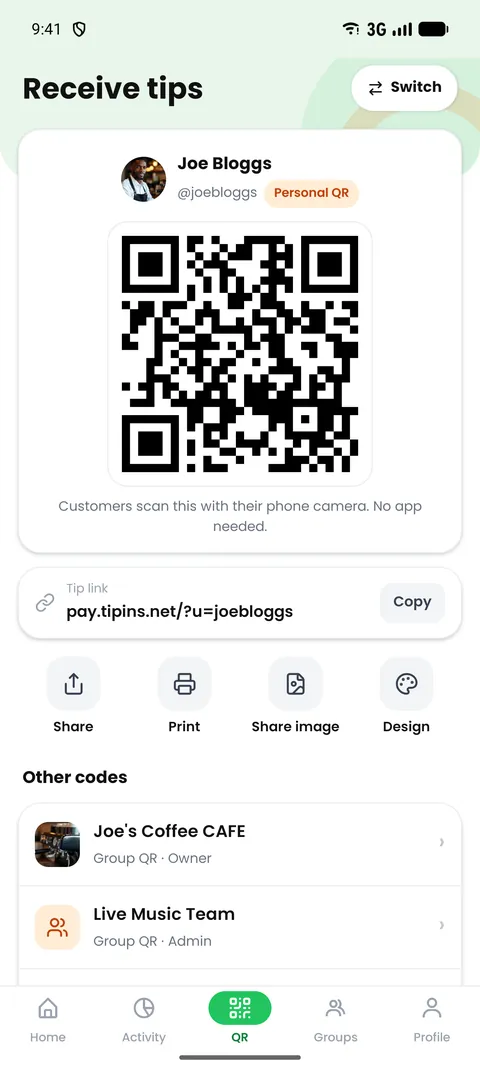
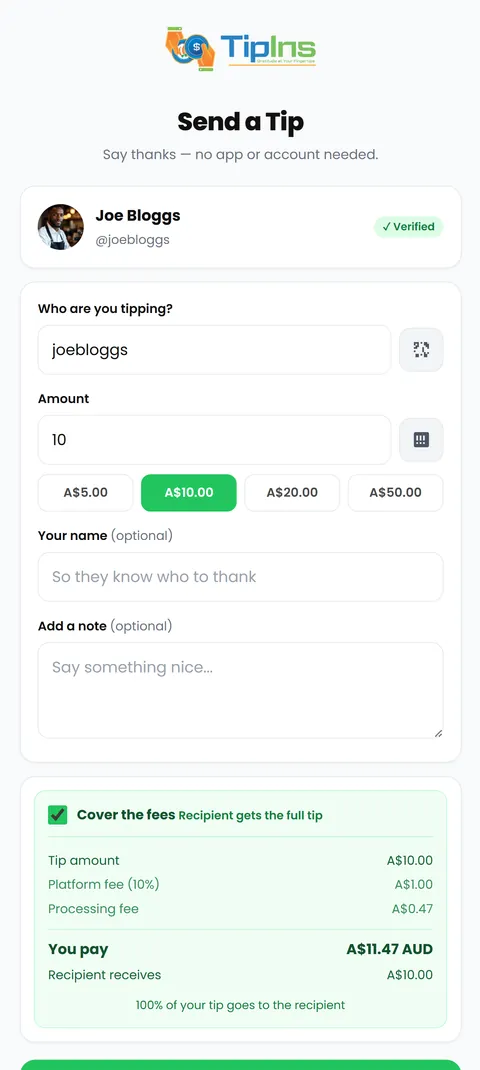
Fewer people carry cash, and many people have no coins on them. A QR code sign next to your case lets them tip by card, Apple Pay or Google Pay without stopping you mid-song. With TipIns the person tipping covers the fees by default, so you receive the full tip, and one code can split tips between band members. You can make a sign with the tip sign generator.
World busking map: Permit rules for 131 cities on one map.
Common questions
Can you busk next to another busker?
It is bad etiquette and often against the rules. Many cities require 50 to 100 metres between acts, and where there is no rule, you should not be able to hear each other.
How long should you busk in one spot?
Follow your city's limit, which ranges from 30 minutes in Amsterdam to two hours in places like Melbourne and Dublin. Where there is no rule, about an hour then moving on is a sensible default.
What should you do if a shop owner asks you to move?
Move politely, even if you think you are within the rules. In some places, such as Wellington, it is a licence condition, and keeping businesses on side protects the pitch for every busker.
Is it rude to ask people for tips while busking?
Walking up to people or calling out for money is discouraged by many city codes and banned in some places. An open case and a sign are generally accepted, but check the local code.
How loud is too loud for busking?
A common test in city codes is distance: if your music is clearly audible 30 to 50 metres away, it is probably too loud. Some cities, such as Melbourne and Dublin, set decibel limits.

 App Store
 Google Play