
Short answer: The core busking kit is small: your instrument, something to collect tips in, a clear sign, water and your permit if one is needed. Add a battery amp, stand, seat and weather cover only when your act and the local rules call for them, and keep everything light enough to carry and move in a few minutes.
The quick checklist
| Item | Why you need it | Must have? |
|---|---|---|
| Instrument, spares and tuner | Strings, reeds and picks break at the worst moment. | Yes |
| Open case, hat or tip box | Shows people where tips go. | Yes |
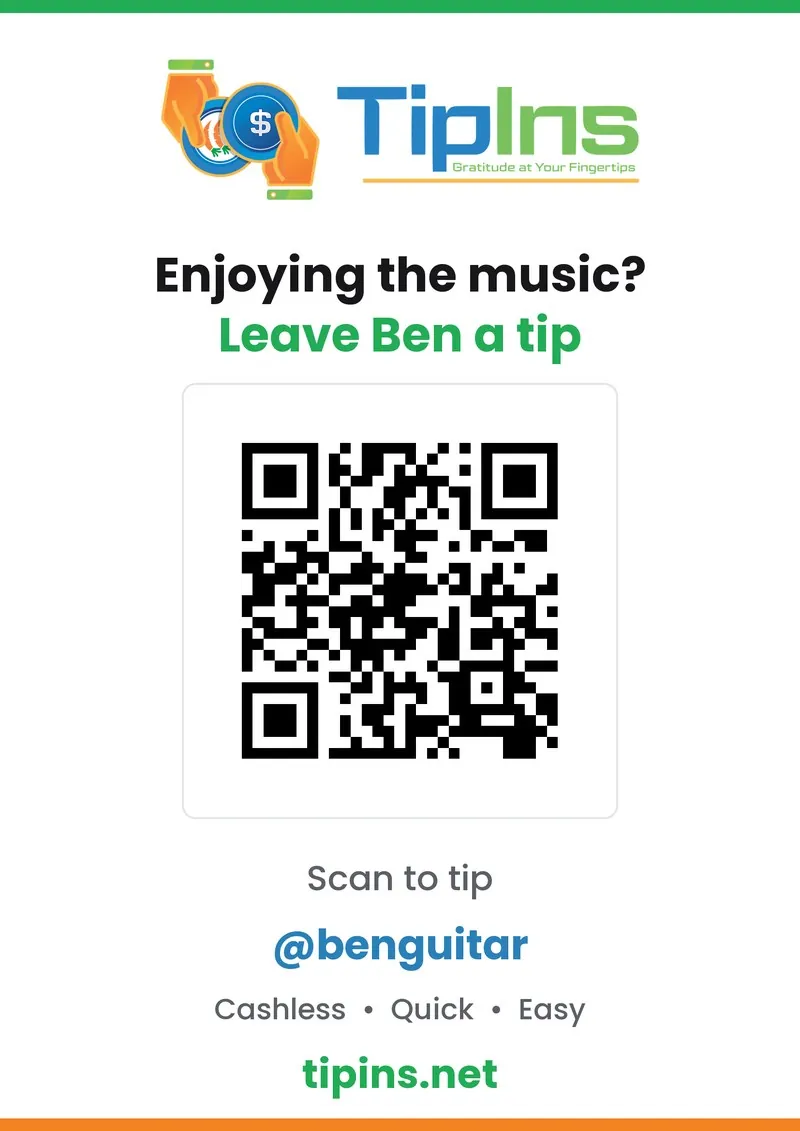
| Sign with QR code | Your name, socials and a way to tip without cash. | Yes |
| Permit and ID | Some cities ask you to show them on request. | Where required |
| Water and a small towel | Singing outdoors dries you out fast. | Yes |
| Battery amp and cables | Helps quiet instruments carry. | Only where allowed |
| Stand, stool or mat | Comfort over a long set. | Optional |
| Rain cover and bags | Protects gear when the weather turns. | Recommended |
| Trolley or backpack | Moving between pitches. | Recommended |
Sound: choosing a battery amp
Check the rules before you buy. Many cities ban amps or need a separate permit, and where amps are allowed they are often required to be battery powered and small. Calgary allows only small, portable battery amps, and Liverpool asks for a small battery amp at ground level. Our amplifier rules guide lists city limits.
What to look for in a busking amp:
- Battery life that covers your longest day with spare, and ideally a battery you can charge or swap easily.
- Enough inputs for your setup, for example one instrument and one microphone, each with its own volume.
- Weight and a handle you can carry with everything else.
- Clean sound at low volume. Most street limits are modest, so you will rarely run an amp near its maximum.
- A sturdy case that copes with knocks and light rain.
Stands, seats and your footprint
Some cities limit how much space you take. Melbourne general area pitches are limited to 2 square metres, and in Denver a solo act may use 6 by 4 feet. Choose gear that folds small.
- A folding stool or a light crate that doubles as storage.
- A compact music or tablet stand if you need lyrics or chords. Clip it so wind does not take it.
- A small mat or rug to mark your space and protect gear from wet ground.
Do not lean things on benches, lamp posts or shop fronts. Codes such as Manchester's ask you not to use street furniture.
Collecting tips: case, sign and payment
Your tip container should be open, visible and in front of you. A guitar case works well because it also signals what you do. Seed it with a few coins and a note before you start.
Your sign does a lot of work. Keep it simple: your name, one line about your act, your social handle and how to tip. Make the text large enough to read from a few metres away.
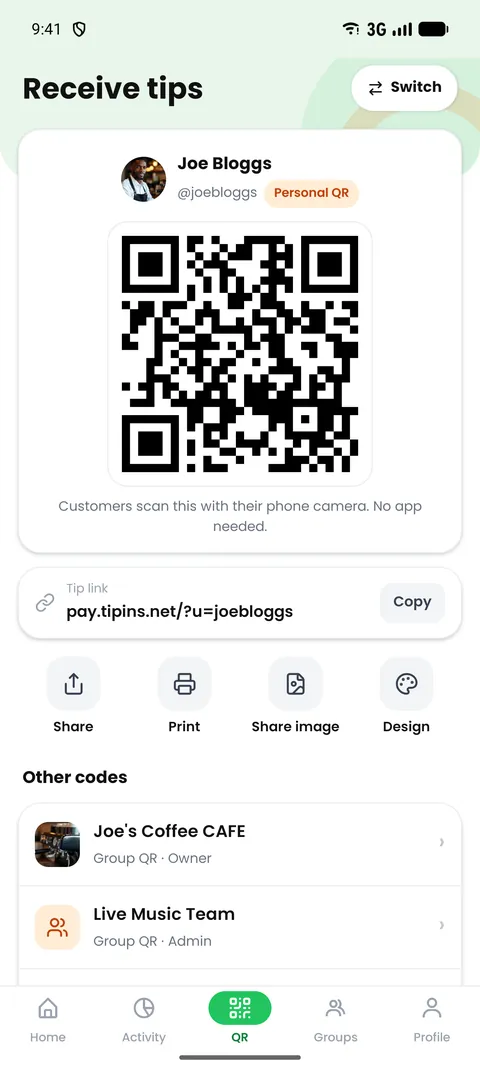
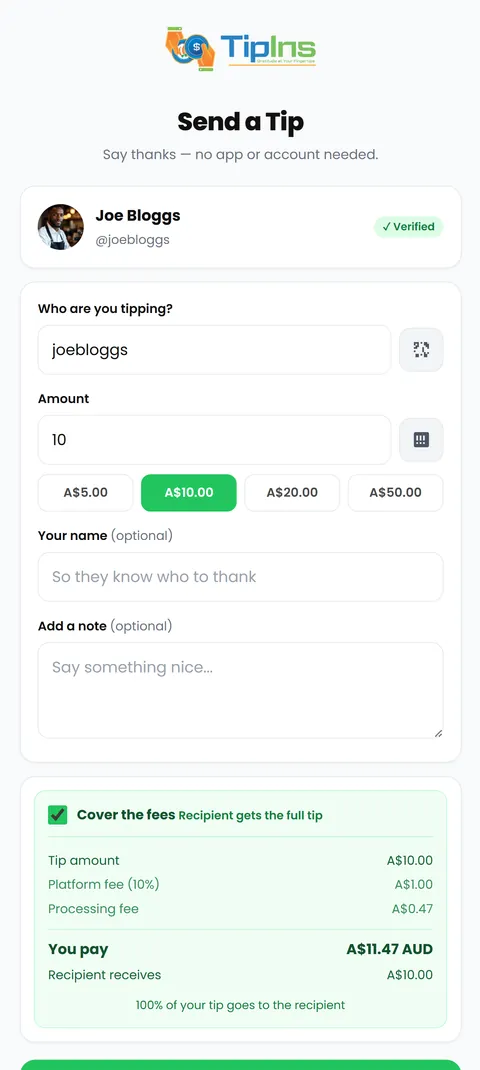
Fewer people carry cash than they used to, so add a way to tip by card. A QR code sign is the lightest option: no reader, no battery and nothing to hand over. With TipIns, listeners scan the code with their phone camera and pay by card, Apple Pay or Google Pay on a web page. The app exports print-ready sign designs in business card, A5, A4 and A3 sizes, or you can make one with the tip sign generator.
When you choose a sign, look for:
- A rigid board or stand so it does not fold in the wind.
- A matte or laminated finish that phones can scan in sunlight.
- A QR code at least the size of your palm.
Rain and weather plan
- Waterproof bags or covers for your instrument, amp and sign.
- A plastic sleeve for your permit and any paper set list.
- Sun protection: a hat, sunscreen and a light-coloured cover for gear that overheats.
- Warm layers and fingerless gloves for cold evenings.
- A backup pitch under cover, where rules allow it. Check that covered areas such as arcades and station forecourts are public land and not private property.
Comfort and safety
- Earplugs or musician's ear protection if you play near loud traffic or other acts.
- A zipped pouch or money belt to empty the case into during long sets.
- A charged phone and a small power bank.
- Snacks, and a note of the nearest public toilet.
- A small first aid kit for cuts from strings or kit.
Carrying it all
Many cities make you move after a set time, from 30 minutes in Amsterdam to two hours in Glasgow, and you must then go at least 50 to 100 metres in many places. A folding trolley or a backpack with straps for your amp makes the move quick. Practise packing up: if it takes more than a few minutes, you are carrying too much.
Paperwork to carry
- Your busking permit or licence, if your city issues one. Check the busking map.
- Any extra amplification permit, such as Dublin's or New York City's sound device permit.
- Photo ID.
- Proof of public liability insurance if your permit conditions ask for it.
World busking map: Permit rules for 131 cities on one map.
Common questions
What equipment do I need to start busking?
Your instrument with spares, an open case or hat for tips, a sign, water and your permit if your city needs one. You can add an amp, stand and seat later.
What is a good amp for busking?
Look for a battery-powered amp with enough inputs for your setup, battery life for a full day, a weight you can carry and clean sound at low volume. Check that your city allows amps before you buy one.
Do buskers need a card reader?
Not necessarily. A QR code sign lets people tip by card, Apple Pay or Google Pay on their own phone, so there is no reader to charge or hand over.
How do I protect my gear from rain while busking?
Carry waterproof covers for your instrument, amp and sign, keep paperwork in a plastic sleeve, and know a covered backup pitch where busking is allowed.
Should I bring a seat when busking?
If your act allows it and your city does not limit your footprint too tightly, a folding stool or crate helps on long sets. Keep it light and small.

 App Store
 Google Play