
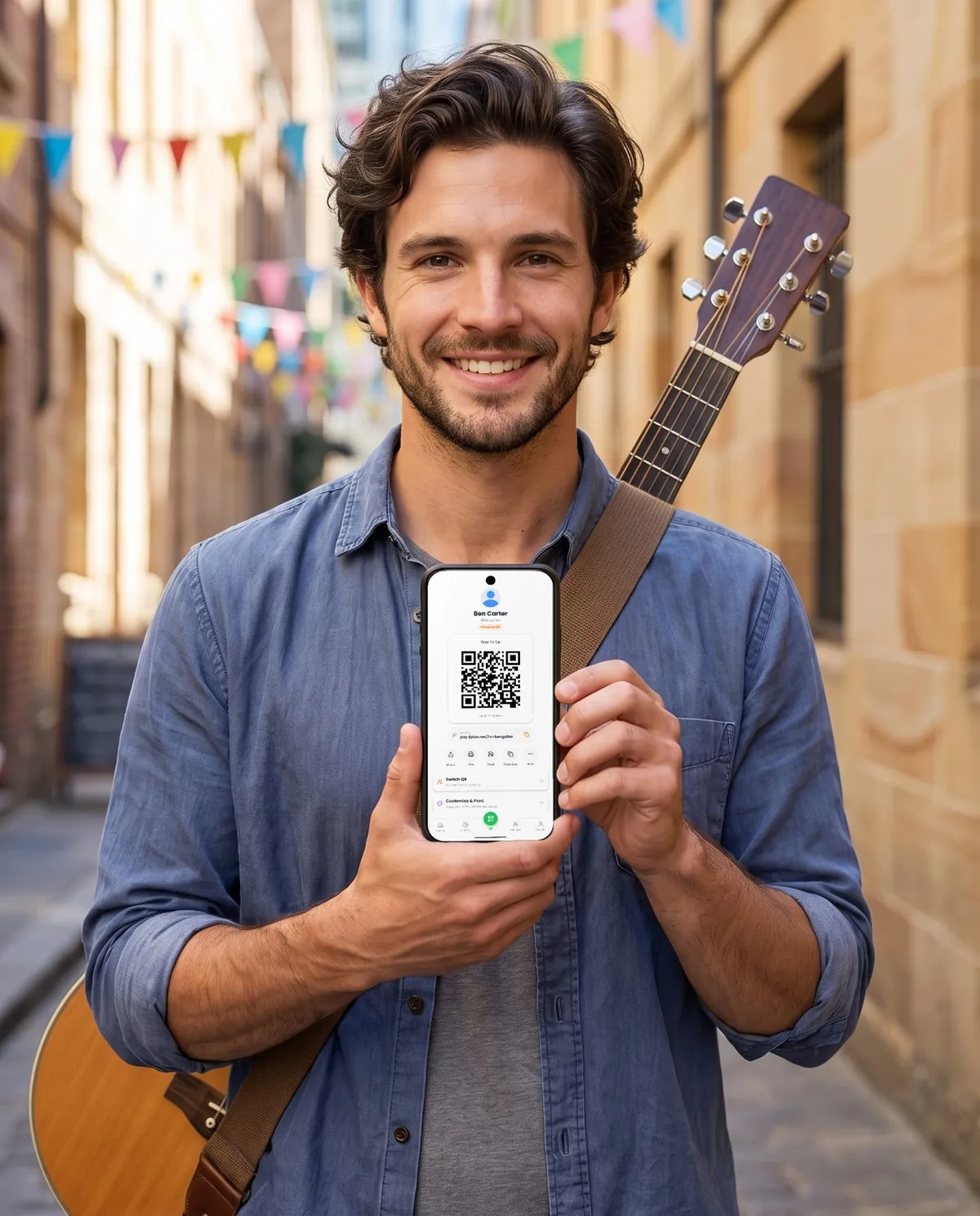
Short answer: Most busking risks are predictable: cash and gear going missing, heat, cold and rain, loud sound over long sets, and late shifts on your own. Keep little cash on show, never leave gear unattended, plan for the weather, protect your ears, and tell someone where you are when you busk at night.
Protecting your tips
An open case full of notes is an invitation. A few habits cut the risk a lot:
- Empty the case regularly. Leave a few coins and a small note as a hint, and move the rest to a zipped pocket or a bag on your body, not behind you.
- Do it discreetly. Counting money in public tells everyone what you made.
- Put the case in front of you, within reach, not off to one side where someone can grab it while you play.
- Take some tips digitally. Tips made by card or phone go to your account, not into the case, so there is less to steal and less to carry home.
If someone does grab the case, let it go. No amount of tips is worth a fight, and your instrument is worth more than the cash.
Protecting your gear
- Never leave gear unattended, even for a minute. If you need a break, pack down or ask a trusted friend to watch it.
- Use a strap or clip to attach your amp or bag to your stand or your leg.
- Keep spares and valuables out of sight. Phones, spare instruments and wallets belong in a closed bag, not on the ground.
- Photograph serial numbers of instruments and amps and keep the photos in your email or cloud storage.
- Check your insurance. Home contents cover does not always include gear used away from home or for paid performance. Ask your insurer.
Weather: heat, cold and rain
| Condition | What to do |
|---|---|
| Hot sun | Pick a shaded pitch, drink water through the set, wear a hat and sunscreen, and keep instruments and batteries out of direct sun. |
| Cold | Fingerless gloves, layers you can play in, a warm drink, and shorter sets with breaks to warm up. Strings and tuning shift, so retune often. |
| Rain | Look for covered pitches you are allowed to use, carry a cover for your amp and a waterproof bag for your instrument, and stop if water gets near anything electrical. |
| Wind | Weigh down your sign and case, and keep light items packed away. |
Electricity and water do not mix. If you use a battery amp, keep it off wet ground and covered, and never plug into building power. Several cities ban that anyway: Santa Monica, for example, does not allow generators or plugging into buildings.
Looking after your hearing and voice
Buskers spend hours next to amps, drums or brass, often in echoing spaces such as underpasses and stations. Hearing damage builds up slowly and does not come back.
- Wear musicians' earplugs that lower volume evenly, especially if you play drums, brass or amplified music.
- Keep the amp beside or in front of you, not pointed at your head, so you do not turn it up to hear yourself.
- Take breaks between sets in a quieter spot.
- Warm up and rest your voice if you sing. Singing over traffic for hours strains it, and a small battery amp at low volume can save your voice.
Playing quieter also helps with the neighbours. Many cities set sound limits, such as Melbourne's 72 dB at 3 metres for general area acts.
Busking late or alone
Evening crowds can be generous, but late shifts carry more risk. Check the hours first: Sydney allows busking until midnight on Fridays and Saturdays, while many cities stop at 9pm or 10pm. Then:
- Tell someone where you are and when you expect to finish, and share your live location with a friend.
- Choose a well-lit pitch with other people around, near open businesses.
- Keep your exit simple: know your route home and keep your gear packable in a couple of minutes.
- Leave early if the mood changes. If someone is drunk, aggressive or hanging around your case, pack up and go.
- Busk in pairs when you can, even if only one of you plays.
Before your first late set, check the local rules on the world busking map.
Dealing with difficult people
Most people who stop are friendly, but you will meet hecklers, drunk people who want to sing along and people who want your spot. Stay polite and do not argue. A short, friendly reply and carrying on usually works. If someone becomes threatening, stop playing, keep your instrument close and walk to a busy shop or staff member. Call the police if you feel unsafe.
If another busker disputes your pitch, agree a handover time rather than arguing. Our guide to busking etiquette covers this.
Risky acts and public safety
If your act uses fire, knives or other dangerous props, the risk extends to your audience. Many cities ban these acts or require a special permit: the Gold Coast prohibits flammable materials, fire, knives and swords, Calgary does not permit high-risk acts, and Auckland has a special licence for dangerous acts. Some councils ask for public liability insurance for acts with equipment or audience participation. Auckland Council's insurance does not cover street performers, and the council advises having your own cover. See our guide to busking insurance.
Less cash to carry home
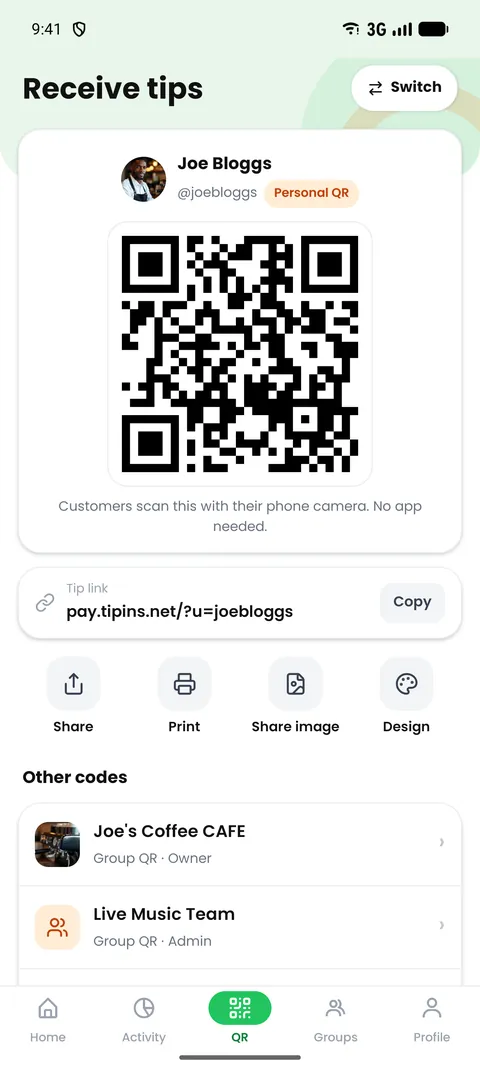
Fewer people carry cash, and every tip that arrives by phone is one less coin in your case at the end of the night. With TipIns, listeners scan your QR code and tip by card, Apple Pay or Google Pay, and the money goes to your account with free weekly payouts to your bank.

World busking map: Permit rules for 131 cities on one map.
Common questions
How do buskers protect their money?
Empty the case regularly into a bag or pocket on your body, keep only a little cash on show and avoid counting money in public. Taking some tips by QR code or card means less cash to protect.
Is it safe to busk at night?
It can be, with planning. Pick a well-lit pitch near open businesses, tell someone where you are, keep your gear quick to pack and leave if the atmosphere changes.
Can you busk in the rain?
Acoustic acts can play under cover if the rules allow that spot. Keep amps and electrics covered and off wet ground, and stop if water gets near anything electrical.
Should buskers wear earplugs?
If you play loud instruments or amplified music for long sets, musicians' earplugs help protect your hearing without making everything sound muffled.
What should I do if someone steals my busking tips?
Do not chase or fight. Note what happened, report it to the police and keep less cash on show in future.

 App Store
 Google Play