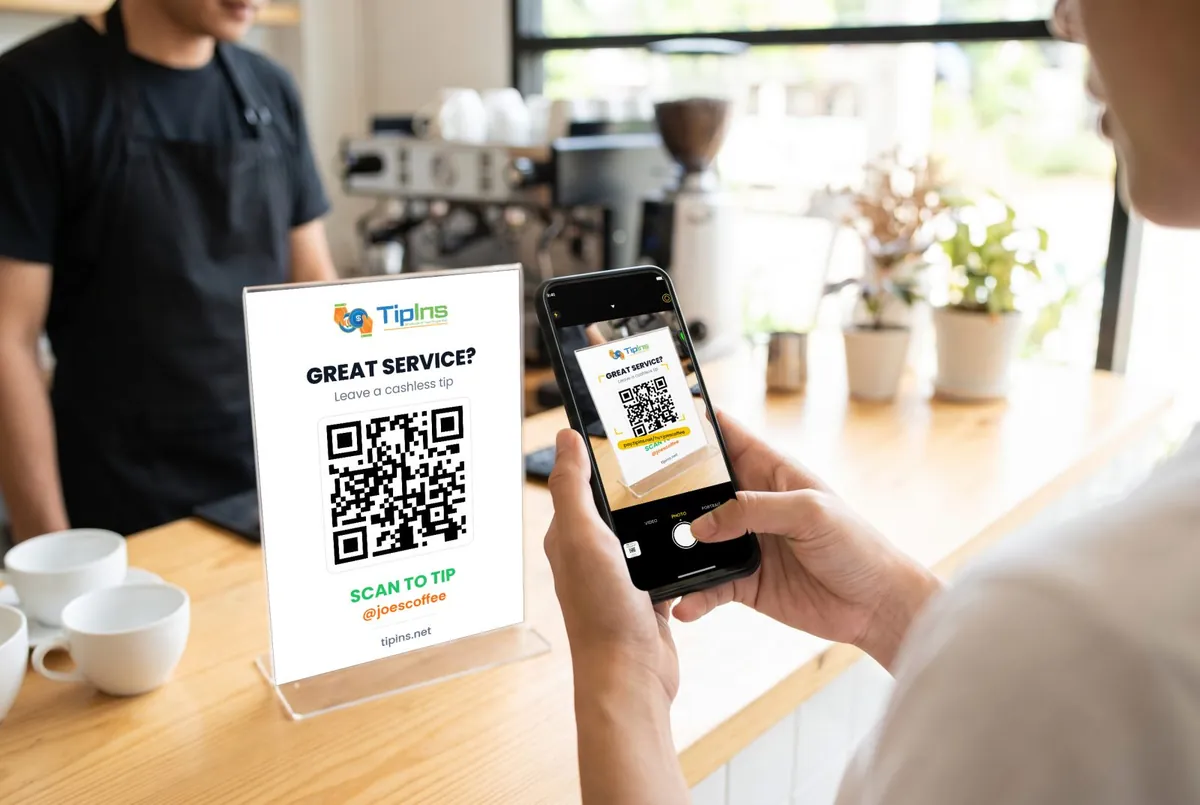

Short answer: create a tip page in an app such as TipIns, add your BSB and account number, print the QR code and place it on the counter, table or your lanyard. Customers scan with their phone camera and tip in Australian dollars by card, Apple Pay or Google Pay.
Tipping in Australia has always been optional. What has changed is how people pay. The Reserve Bank of Australia's 2022 Consumer Payments Survey found that cash made up only 13% of consumer payments. A customer who wants to leave a few dollars for great service often has no coins to leave. A QR code for tips gives them a way.
How QR code tipping works
- You show or print your QR code.
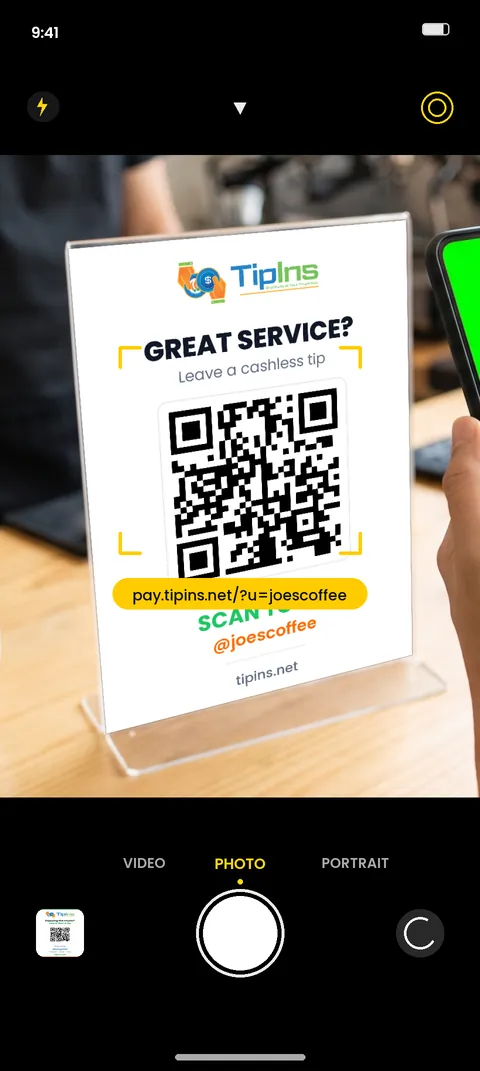
- The customer points their phone camera at it. A secure web page opens. They do not need an app or an account.
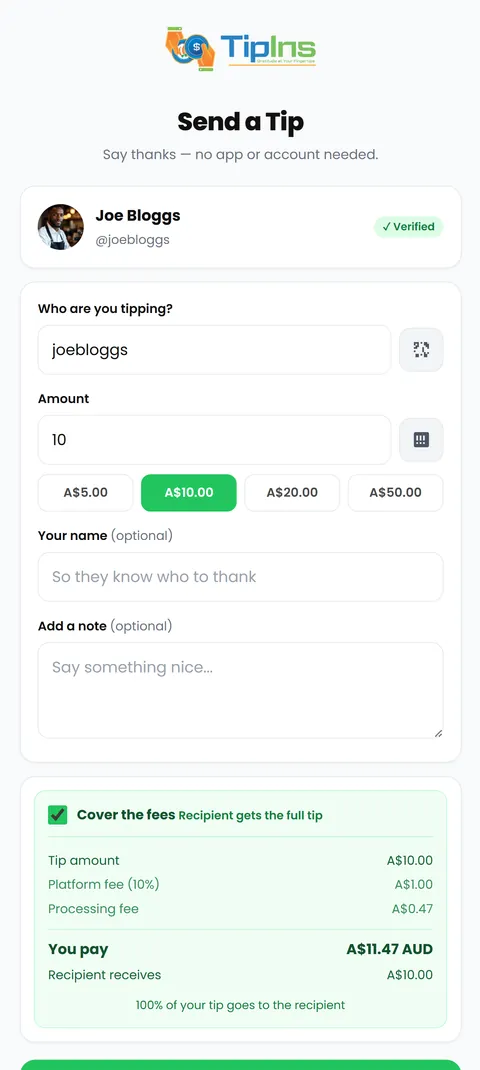
- They choose an amount and pay with Apple Pay, Google Pay or a card.
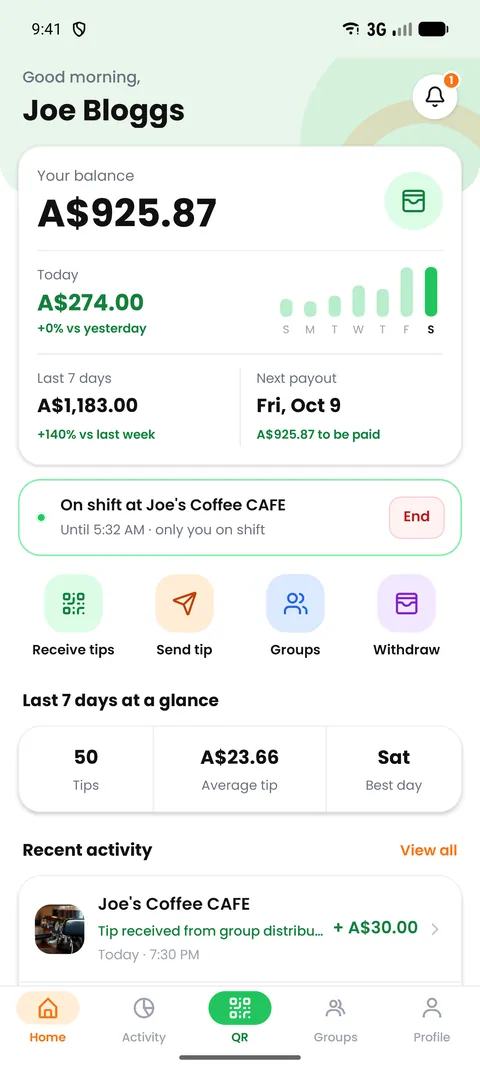
- The tip appears in your balance straight away and is paid to your bank account.
Setting up in Australia
1. Create your account
Download TipIns and choose a username. You will be asked for your legal name, date of birth and address. Payments are processed by Stripe, which is required to verify the identity of anyone receiving money.
2. Add your bank account
Enter your BSB and account number. Tips are paid in Australian dollars to any Australian bank account.
3. Print your code
Open the QR tab and export your design in business card, A5, A4 or A3. Choose the size by how far away customers stand. The measurements are in how to make a tip jar QR code sign.
Where to put the code
- Cafes: beside the card terminal and at the pick-up point.
- Restaurants: on the table or with the bill, and on a card the waiter can leave.
- Bars: on the bar top and behind the bar at eye level.
- Hotels and tours: on a lanyard or business card, so guests can tip a guide, porter or housekeeper directly.
- Markets and events: on an A3 sign at the front of the stall.
What it costs
| Item | Cost |
|---|---|
| Download and monthly fee | Free |
| Per tip | 10% platform fee plus a small processing fee. The customer covers it by default, so you receive the full tip. |
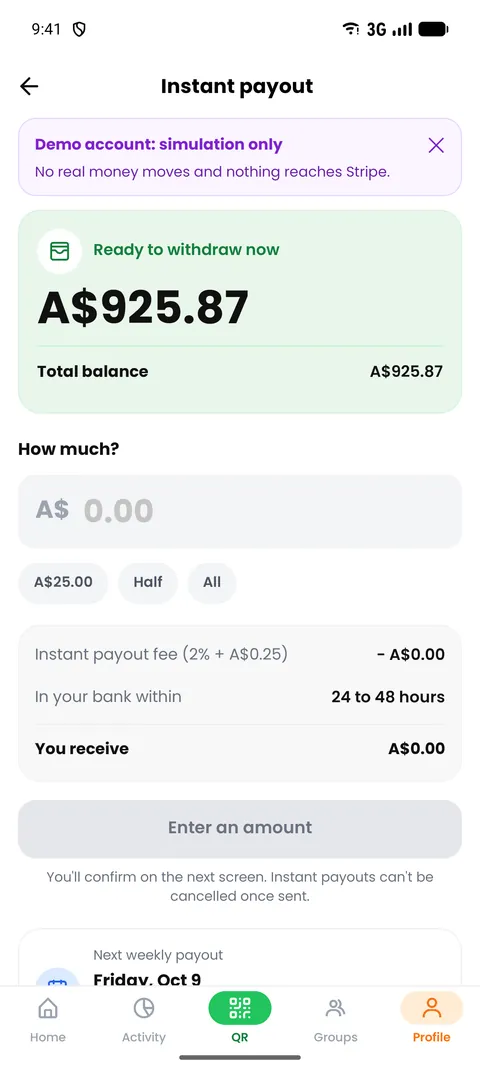
| Weekly payout to your bank | Free, for balances of A$25 or more |
| Instant payout | 2% plus A$0.25 |
If a customer chooses not to cover the fees, they are taken from the tip.
Tips for the whole venue
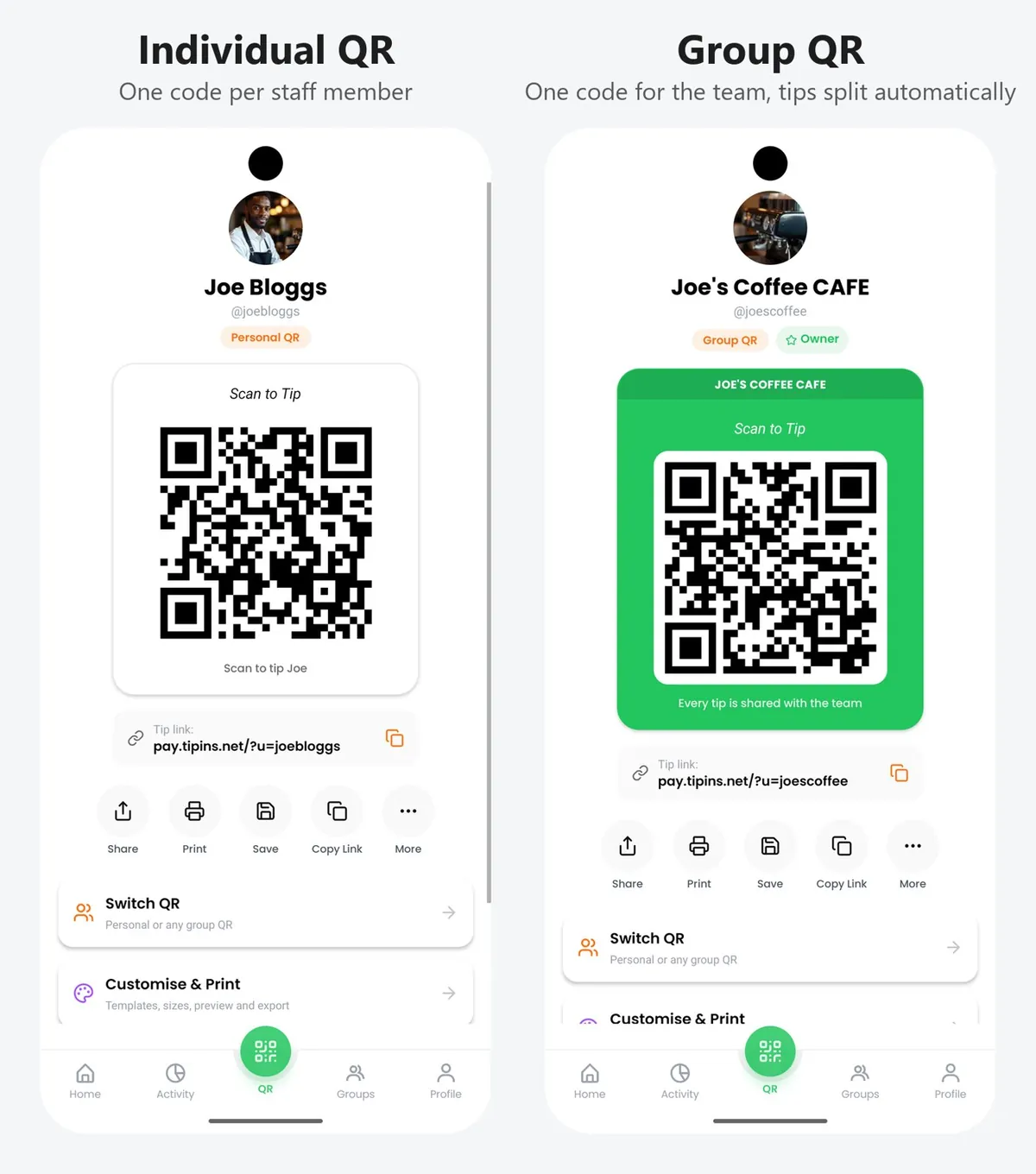
If tips are shared, create a group. The venue shows one QR code and each tip is split between team members, equally or by percentages the owner sets. With active shifts turned on, a tip is shared only between the staff working when it arrives. Each person is paid into their own bank account, so nobody has to hold the pot or count a jar at close.
The splitting methods are explained in how to split tips between employees fairly.
Tax and records
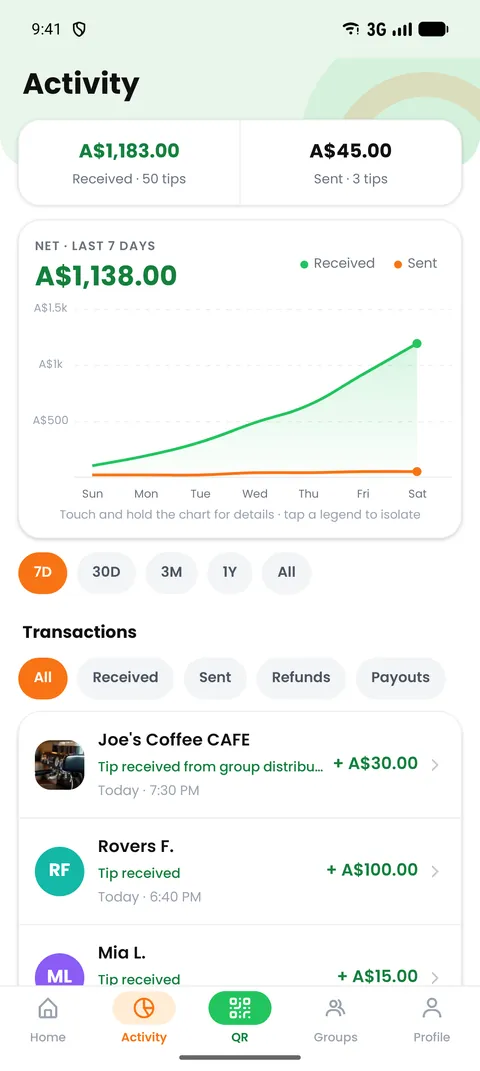
The Australian Taxation Office treats tips and gratuities as assessable income, so they belong in your tax return. Digital tips make this simpler than cash: your activity feed lists every tip with its date and amount.
This is general information, not tax advice. Check the ATO website or ask a registered tax agent about your own situation.
Busking or performing?
The same code works on the street. See the digital tip jar guide for buskers for sign sizes and pitch advice.
Common questions
Is tipping expected in Australia?
No. Tipping in Australia is optional and wages do not depend on it. Customers tip to thank someone for good service, which is why it needs to be quick and easy when they choose to.
Do customers need an app to tip by QR code?
No. They scan the code with their phone camera and pay on a secure web page with Apple Pay, Google Pay or a card.
How much does QR code tipping cost in Australia?
TipIns has no monthly fee. A 10% platform fee plus a small payment processing fee applies to each tip, and by default the customer covers it so you receive the full tip.
When are tips paid to my bank account?
Balances of A$25 or more are paid to your Australian bank account once a week. Smaller balances roll over. An instant payout is available for 2% plus A$0.25.
Are tips taxable in Australia?
Yes. The ATO treats tips and gratuities as assessable income, so include them in your tax return. Keep a record of what you receive.