
Short answer: A City of Toronto busker permit is required to play music or perform for donations on the street, and amplified sound is not permitted. The permit does not cover TTC property, where subway musicians need a separate TTC licence won by audition.
Do you need a permit to busk in Toronto?
| Permit needed? | Yes |
| Permit | Busker / Sidewalk Artist permit (TTC: Underground Sounds Subway Musicians licence) |
| Cost | CA$55.91 per year for the city permit; TTC licence CA$197.75 for the three-year term |
| How to apply | Apply online through the City of Toronto or in person at the Licence and Permit Issuing Office, 850 Coxwell Avenue, with government ID and a photo. |
| Regulated by | City of Toronto (Municipal Licensing and Standards); Toronto Transit Commission for the subway |
| Official page | toronto.ca |
The rules in Toronto
- No amplified sound is allowed under the city busker permit.
- Applicants must be 18 or older, or 16 to 17 with a signed letter of consent from a parent or caregiver.
- Each member of a group or band must apply for their own permit.
- Permits expire on 31 March each year, and a permit issued after 1 February runs to the following year.
- Since April 2026 busking is banned on listed downtown streets around the Eaton Centre and Sankofa Square.
- Preaching is not treated as busking.
Where buskers play in Toronto
- Sankofa Square (Yonge-Dundas) and Eaton Centre area. Busking not allowed since April 2026, including Yonge Street from Dundas to Queen and Dundas Street from Victoria to Bay; the city says specific busking locations there will be announced in 2027.
- TTC subway stations. Licensed Underground Sounds musicians only, at 29 dedicated spaces across the subway system.
Stations and public transport
The TTC Underground Sounds programme issues 89 licences by audition every three years (current term 29 April 2024 to 28 April 2027) to Ontario residents aged 18 or over, who play at 29 designated subway spaces.
Good to know
TTC auditions for the 2024 to 2027 term are closed and the TTC has said the next cycle will be in 2027, so a visiting busker cannot get a subway licence now. The downtown no-busking zone introduced in April 2026 covers the busiest pedestrian area in the city.
Taking card tips on a Toronto pitch
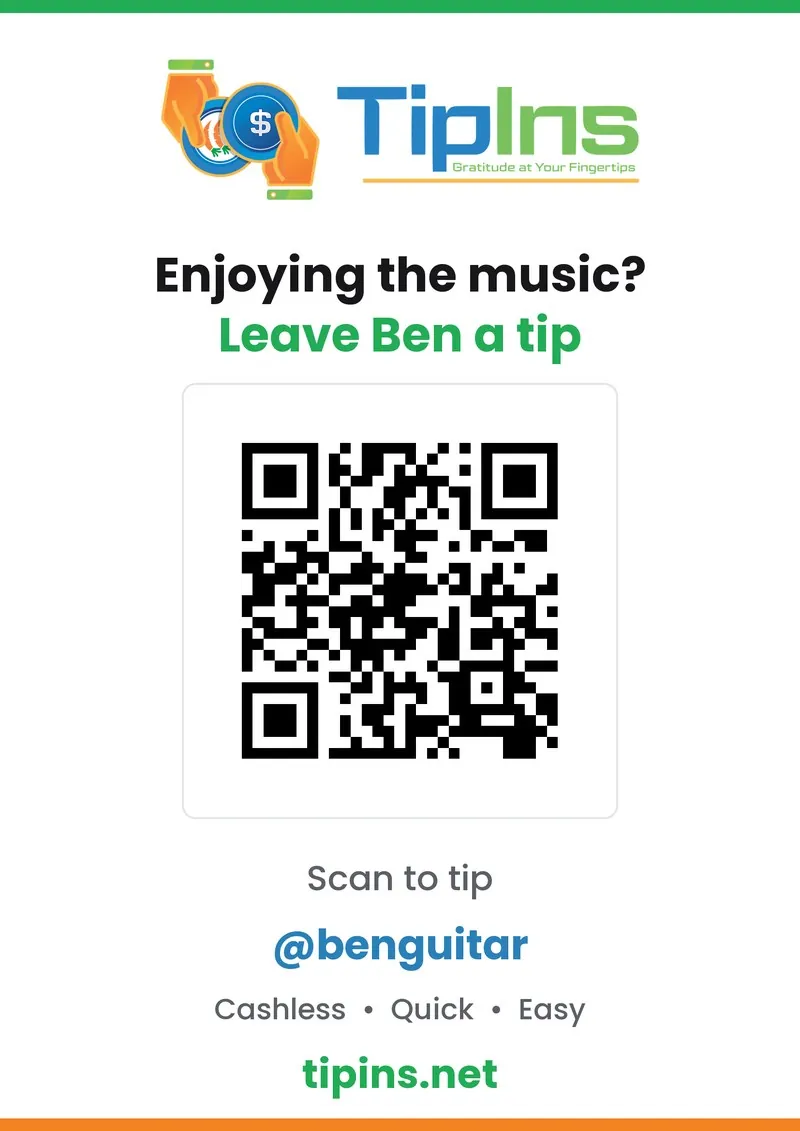
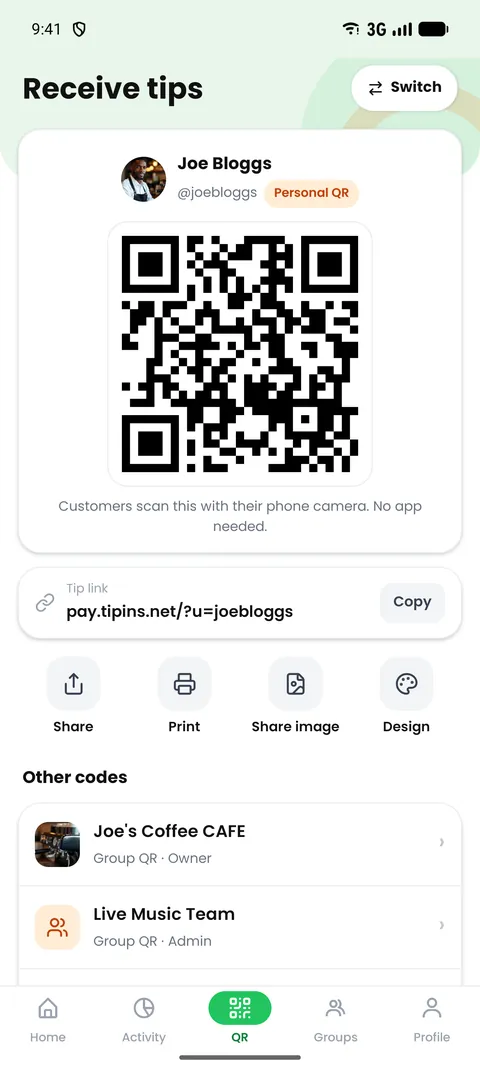
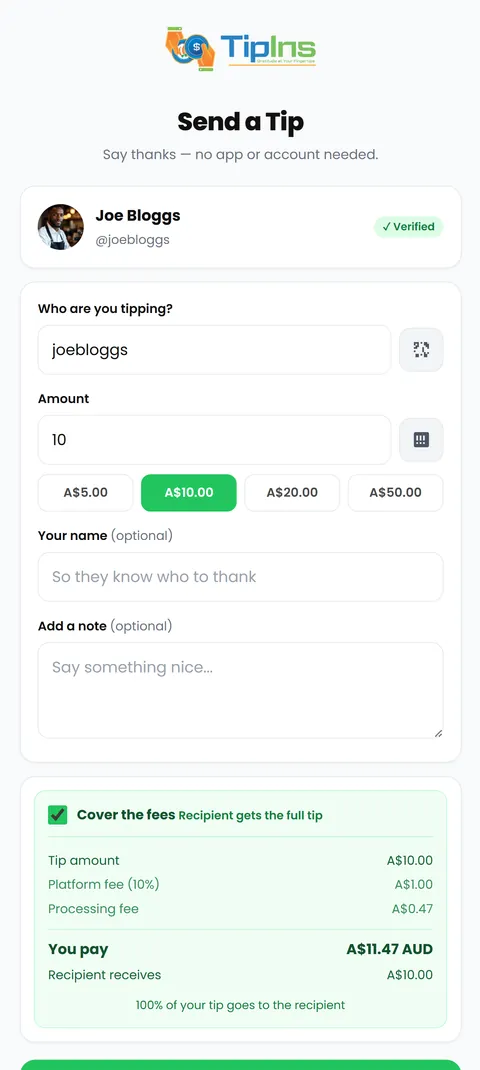
Whatever the permit position, the audience in Toronto has the same problem as everywhere else: they liked it, and they have no coins. A QR code on a sign beside your case lets them tip in Canadian dollars by card, Apple Pay or Google Pay. Visitors can pay with a card from home, and nobody needs an app.
- Print it large. A phone reads a code from about ten times its width, so a 10 cm code works from a metre and an A3 sign from about three.
- Stand it upright at knee to waist height, with your name and one line saying what it is for.
- Check the rules above on signs and selling. A tip sign is not a sale, but some cities restrict signs, and most treat CDs and merchandise separately.
- Playing as a group? One code can split every tip between the members automatically.
The full set-up, with sign sizes and pitch advice, is in how to set up a digital tip jar for busking.
Sources
Checked in October 2026. Rules and fees change, and enforcement varies from street to street, so confirm with City of Toronto (Municipal Licensing and Standards); Toronto Transit Commission for the subway before you play. This page is general information, not legal advice.
Common questions
Do you need a permit to busk in Toronto?
A City of Toronto busker permit is required to play music or perform for donations on the street, and amplified sound is not permitted. The permit does not cover TTC property, where subway musicians need a separate TTC licence won by audition.
How much does it cost to busk in Toronto?
CA$55.91 per year for the city permit; TTC licence CA$197.75 for the three-year term.
Can you use an amplifier when busking in Toronto?
No amplified sound is allowed under the city busker permit.
Can buskers in Toronto take card payments?
Yes. A printed QR code lets listeners tip in Canadian dollars by card, Apple Pay or Google Pay from their own phone, with no card reader to carry or charge.