
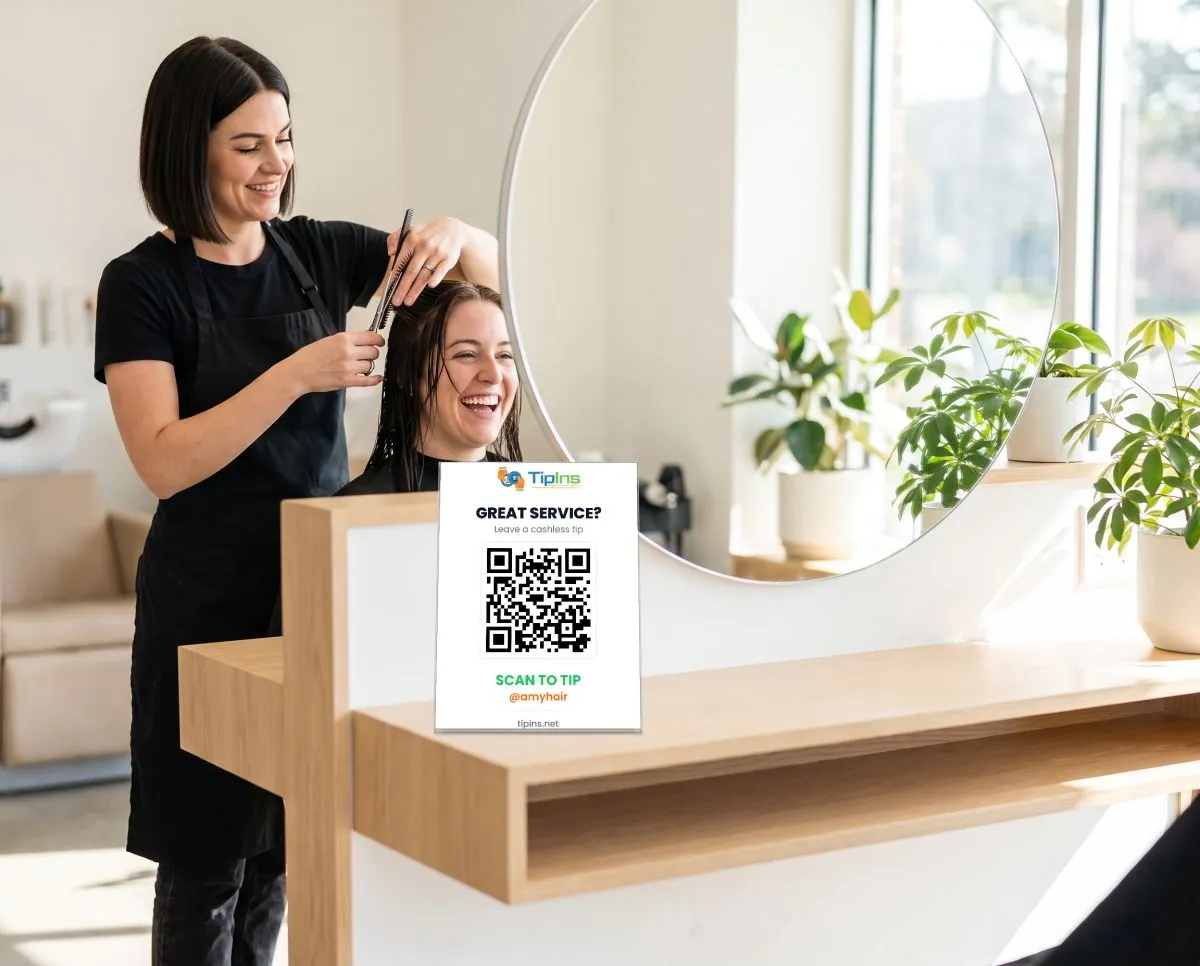
Short answer: The usual tip for a hairdresser in the US is 15 to 20% of the service price, before any discount. With no cash on you, the options are: add it at the till, ask for their payment handle, scan their tip code, or tip at your next visit.
How much to tip a hairdresser
| Situation | Usual tip |
|---|---|
| $40 cut | $6 to $8 |
| $150 cut and colour | $22 to $30 |
| Assistant who shampoos or blow-dries | $3 to $5, given separately |
These are customary amounts in the United States, in US dollars. They are a guide, not a rule: tip more for exceptional service.
Do you have to tip a hairdresser?
It is not compulsory, but in the US it is expected: most stylists rent their chair or work on commission, and tips are a real part of their income. Tipping a stylist who owns the salon used to be optional and is now common.
Can you tip a hairdresser by card?
It depends on the salon. Many let you add a tip on the card terminal. Others, especially salons where stylists rent a chair, cannot pass a card tip to an individual stylist, so they ask for cash or a payment app.
4 ways to tip a hairdresser without cash
- Add it at the till. Ask before you pay: "Can I put the tip on my card?" If the answer is yes, say who it is for so it reaches the right person.
- Ask for their payment handle. Chair-renting stylists usually have Venmo, Cash App or Zelle and often keep the handle on a card at their station.
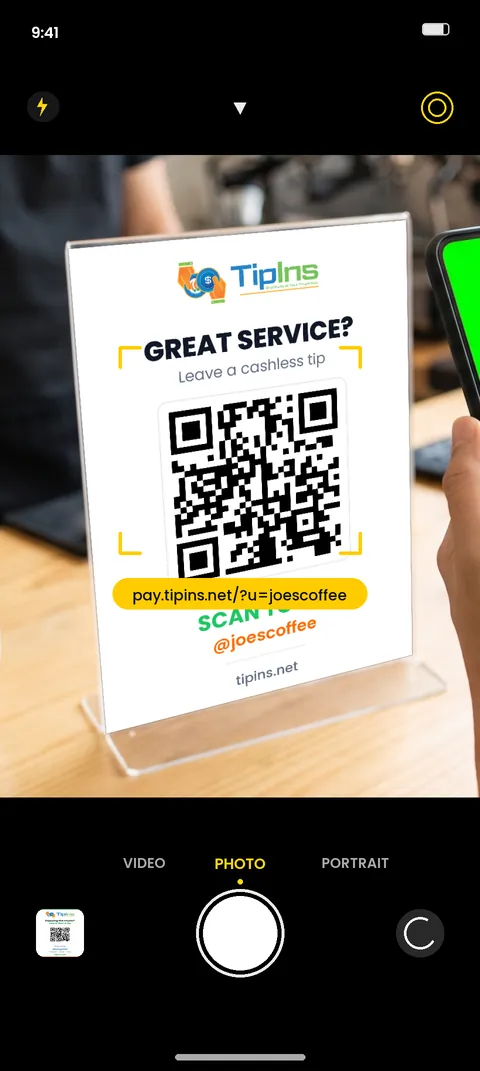
- Scan their tip code. A growing number of stylists keep a QR code at the mirror. You scan it with your camera and pay by Apple Pay, Google Pay or card.
- Tip at your next visit. If you are a regular, say so and add it next time. Stylists remember, and they would rather that than an awkward dash to a cash machine.
What a tip QR code does
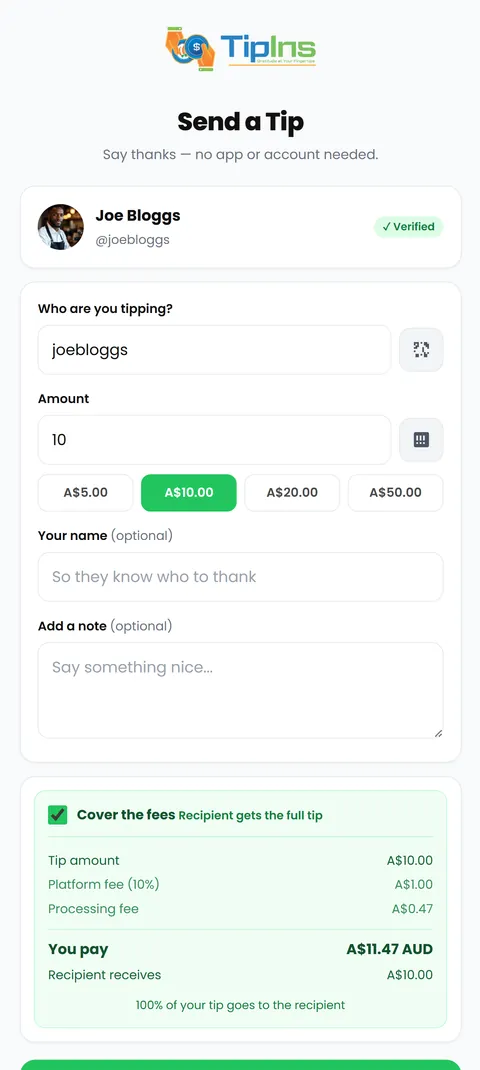
If a hairdresser shows you a QR code, point your phone camera at it. A payment page opens in your browser, you choose an amount, and you pay with Apple Pay, Google Pay or a card. You do not install anything or create an account, and it works with cards from other countries.
If you cannot tip on the day
Say it plainly: "I have no cash today, how can I tip you?" Stylists hear this every day and will have an answer. A rebooking and a review with their name in it also help them directly.
Outside the United States
In the UK around 10% is usual and rounding up is fine. In Australia and New Zealand a tip is a pleasant surprise, not an expectation. In Canada the US custom applies.
Do you work as a hairdresser?
Half your clients pay by card and then apologise that they have nothing for you. If you rent your chair, the salon terminal may not be able to pass a tip to you at all, and handing out a personal Venmo handle mixes clients into your private account.
See how hairdressers take card tips with a QR code: where to put it, what to write on the sign and how to mention it.
Common questions
How much should I tip a hairdresser?
The usual tip for a hairdresser in the US is 15 to 20% of the service price, before any discount.
Do I have to tip a hairdresser?
It is not compulsory, but in the US it is expected: most stylists rent their chair or work on commission, and tips are a real part of their income. Tipping a stylist who owns the salon used to be optional and is now common.
Can I tip a hairdresser with a card or Apple Pay?
It depends on the salon. Many let you add a tip on the card terminal. Others, especially salons where stylists rent a chair, cannot pass a card tip to an individual stylist, so they ask for cash or a payment app.
What if I have no cash to tip a hairdresser?
Say it plainly: "I have no cash today, how can I tip you?" Stylists hear this every day and will have an answer. A rebooking and a review with their name in it also help them directly.